Table of Content
Understanding how manufactured homes are built can help you remodel or modify a home. This is especially true when you have to replace the flooring or move walls in a mobile home. Knowing the construction methods that are involved, what are mobile home walls made of and the order of construction, can help you plan your project better and save money. Just like everything else, building a mobile home has improved and has become much better.

Modern mobile home manufacturing plants are marvels of organizational efficiency. Approximately 150 production workers will produce floors per day. Floors is an industry term meaning 1 single-wide or 1/2 of a doublewide. The work is routine, fast-paced, and physically demanding.
Mobile home remodeling. Is it profitable?
The point where the bottom of the truss rests on top of the ceiling panel is sprayed with a quick setting foam adhesive. Areas of the floor that will be covered with vinyl get sanded. Holes for the floor registers are cut, ducts installed and glued/stapled into place. The vinyl is then covered with a protective mat or plastic sheeting.

Batts get pulled to the side so boxes can be installed, they come loose, etc. If this happens and is not corrected, the walls have voids which are going to reduce the efficiency of the heating and cooling systems. Someone uses a router to cut notches into all the exterior wall studs and wire for the wall outlets is stapled in these notches. Sometimes, depending on the siding that will be applied, the wire is covered with shields to prevent a nail from being driven through it when siding is applied. The interior walls are pre-assembled, with paneling on only one side so the inside is accessible to electrical. As fast as the interior walls are placed, the pre-made cabinets, counters, etc. are put in place, wall mirrors hung etc.
Mobile Home Construction Process Overview
Early homes, even those that were well-maintained, tended to depreciate over time, much like motor vehicles. That is in contrast to site-built homes which include the land they are built on and tend to appreciate in value. The arrival of mobile homes in an area tended to be regarded with alarm, in part because of the devaluation of the housing potentially spreading to preexisting structures. The steel chassis is permanently attached to the mobile home. The wheels and axles, however, can be removed after the home has been planted into place.
Have you taken a pencil to the numbers for the work you plan? My experience was that it was very hard to add enough value to make such extensive renovations worthwhile from a financial standpoint. You may have good reasons why it is the best approach for your situation. I often did better using my time and money looking for a home that didn’t need work.
Manufactured home construction
If you made them wide enough to span the distance between the joists you could be sure the weight was distributed & well supported. All the houses I moved were supported on blocks with the wheels and axels hanging from their mounts with no weight on them. If that is the case with yours removing them is fine. You might call a mobile home transport place to see if anyone wants to buy them.

My daughter recently moved into her grandmother’s doublewide which had been empty for 3 years only to discover raccoons in the ceiling. Is there a safe way to access the attic area to look for damage. She is especially concerned about damage to the electical system. Fasten the 2 x 4″ as best you can to the bottom of the walls. Drop the blocks every six feet or so under the sagging areas. Cut the 4 x 4″ to a length that makes a tight fit between the top of the block and the bottom of the wall.
These same bolts are what can be adjusted after the home is set, to stop floor squeaks. As you can see, a mobile home inside and out is really purpose-built. Single-wides are by necessity still very basic in design.

Legally, mobile homes can still be defined as "caravans". In New York State, the Homes and Community Renewal agency tracks mobile home parks and provides regulations concerning them. For example, the agency requires park owners to provide residents with a $15,000 grant if residents are forced to move when the land is transferred to a new owner. Residents are also granted the right of first refusal for a sale of the park, however, if the owner does not evict tenants for five years, the land sale can go ahead. State law also restricts the annual increase in land lot fee to a cap of 3 percent, unless the landowner demonstrates hardship in a local court, and can then raise the land lot fee by up to 6 percent in a year.
Another reason for higher sales is the spaciousness of double-wide units, which are now comparable to site-built homes. Single-wide units are still popular primarily in rural areas, where there are fewer restrictions. They are frequently used as temporary housing in areas affected by natural disasters when restrictions are temporarily waived. Mobile homes built in the United States since June 1976, legally referred to as manufactured homes, are required to meet FHA certification requirements and come with attached metal certification tags.
In New York State, as of 2019, there were 1,811 parks with 83,929 homes. However, even with that change, rapid depreciation often resulted in the home occupants paying far less in property taxes than had been anticipated and budgeted. That led jurisdictions to begin placing limitations on the size and density of developments. Mobile homes come in two major sizes, single-wides and double-wides.
I am hoping to hang something from the ceiling of my 1997 Fleetwood mobile home. I have looked online for some type of electrical plan or layout, but I guess they don’t just put it out there. I was wondering if there was a quick way to find out where the wires are. It may not apply in your case, but many mobile home owners don’t realize the walls are supported on outriggers which are not designed to hold extra weight either.
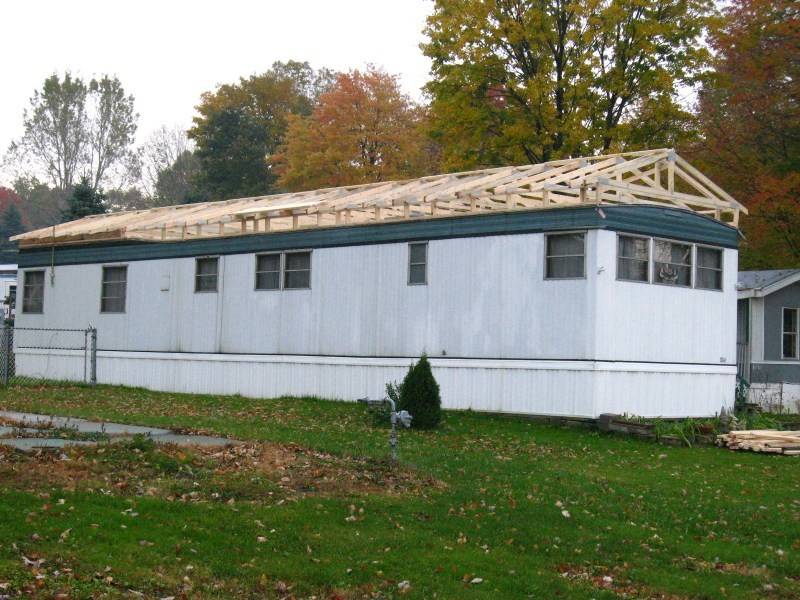
I doubt that any factory installed A/C would have lasted this long. You will have to have a local A/C person take a look at it to tell you what you are dealing with. If the wall you want to remove is on the marriage line where the two halves of the house come together you do NOT want to remove it. If the ceiling is to be textured, it is picked up and moved to a spray/paint area where someone can walk around under it and apply the coating.
I think you are going to find a plastic vapor barrier, insulation and trusses above your tile. 1996 Schult New Generation 16 X80 includes 4′ tongue. Was working with 7′ ceilings with wall support at 9′ and 6′ and 8′ support of the 24′ 2×4. Disappointed about the 2″ vertical supports from the ceiling to the roof about 30″ from the outside will More fink supports in the trusses would be stronger. Finally, it is moved to an area where the holes for electrical outlets, ceiling fans etc. are cut and the electrical boxes installed.


No comments:
Post a Comment